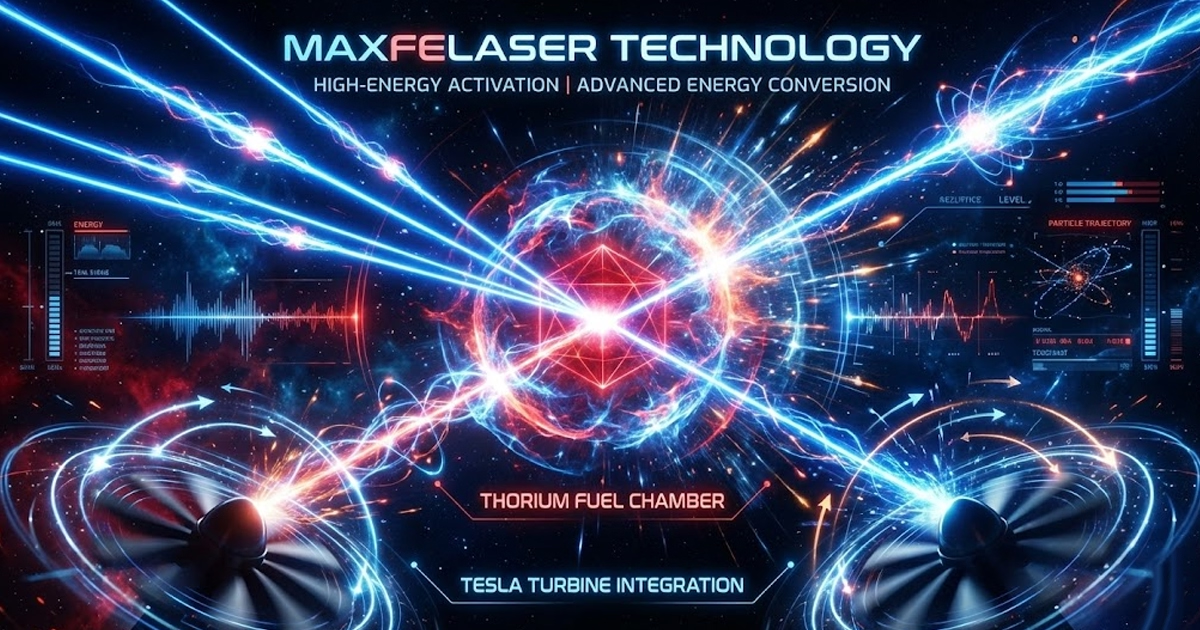
The Science Behind Thorium-Based Laser Power
Laser Power Systems has developed a revolutionary approach to energy generation that combines three key technologies: thorium fuel, high-energy lasers, and advanced turbines. Together, these create the most efficient, safest, and cleanest power generation system ever conceived.
Understanding Thorium-232
Why Thorium?
Thorium-232 is a naturally occurring element that offers profound advantages over conventional nuclear fuels:
- Abundance: 3-4 times more common than uranium in Earth's crust
- Energy Density: 500 times more energy per mass than coal
- Safety: Cannot sustain a chain reaction without external activation
- Minimal Waste: Produces 1/1000th the long-lived waste of uranium
- Proliferation Resistant: Cannot be weaponized
- Availability: Found in most countries, reducing dependence
The Thorium Fuel Cycle
When thorium-232 absorbs a neutron, it transforms into uranium-233, which then undergoes fission, releasing:
- 190 MeV of energy per reaction
- Additional neutrons to sustain the process
- Heat that can be converted to electricity
- Minimal radioactive byproducts
This reaction produces 11 billion kilowatt-hours per metric ton of thorium at 50% conversion efficiency.
The MaxFelaser System
Maximum Fission Energy Laser
Our proprietary MaxFelaser technology represents over 20 years of research and development. This ultra-high-output laser system:
- Initiates Fission: Precisely controls thorium activation
- Regulates Power: Real-time adjustment of output levels
- Ensures Safety: Instant shutdown capability
- Optimizes Efficiency: Maximizes energy extraction
- Eliminates Criticality: No self-sustaining chain reactions
How It Works
- Laser Activation: High-energy laser beam targets thorium fuel
- Neutron Generation: Laser-induced reactions produce neutrons
- Thorium Conversion: Thorium-232 becomes uranium-233
- Controlled Fission: U-233 undergoes controlled splitting
- Heat Production: Nuclear energy converts to thermal energy
- Power Generation: Heat drives turbines and generators
Advantages Over Traditional Nuclear
Unlike conventional nuclear reactors that rely on uranium chain reactions:
- No criticality accidents possible
- No meltdown scenarios
- No high-pressure systems
- No cooling failure risks
- Instant start and stop capability
- Precise power level control
Tesla Turbine Integration
Revolutionary Power Conversion
We utilize advanced Tesla turbine technology - bladeless turbines that offer significant advantages:
- Simplicity: Fewer moving parts than conventional turbines
- Efficiency: High conversion efficiency across temperature ranges
- Reliability: Less maintenance due to reduced complexity
- Compactness: Smaller size for equivalent power output
- Durability: Minimal wear from operation
- Cost: Lower manufacturing and maintenance costs
The Energy Conversion Process
- Heat Transfer: MaxFelaser heat transferred to working fluid
- Steam Generation: Laser plumbing system flashes water to steam
- Turbine Rotation: High-pressure steam spins Tesla turbine
- Mechanical Energy: Rotation drives high-speed generator
- Electrical Output: Generator produces usable electricity
- Heat Recovery: Waste heat captured for efficiency
System Architecture
Modular Design Philosophy
Our systems are built on modular principles allowing scalability from 5 kW to multi-megawatt installations:
Small Systems (5-30 kW)
- Residential whole-home power
- Small commercial applications
- Portable power stations
- Emergency backup systems
Medium Systems (90-200 kW)
- Large commercial buildings
- Small industrial facilities
- Community power systems
- Vehicle propulsion (large trucks, ships)
Large Systems (1.2-2.5 MW)
- Industrial manufacturing plants
- Military installations
- Grid-scale power generation
- Large vessel propulsion
Safety Features
Inherent Safety Design
Safety is built into the physics of our system, not just procedures:
- Passive Cooling: Natural convection, no pumps required
- Walk-Away Safe: Automatically shuts down if unattended
- No Pressure Buildup: Atmospheric pressure operation
- Fail-Safe Controls: System defaults to safe state
- Minimal Inventory: Small fuel quantities limit potential release
- Negative Reactivity: Heating automatically reduces reaction
Waste Management
Our thorium fuel cycle produces dramatically less waste:
- 1/1000th the long-lived radioactive waste of uranium
- Waste decays to safe levels in 300 years vs. 10,000+
- Smaller volumes easier to store and manage
- Some isotopes valuable for medical/industrial use
- Can consume existing nuclear waste as fuel
Performance Specifications
2.5 MW Flagship System
- Dimensions: 28" × 21" × 24"
- Weight: 360 lbs (1/10th conventional size)
- Output: 2.5 megawatts electrical
- Efficiency: 50% thermal to electrical
- Fuel: Thorium-232
- Operational Life: 30+ years
- Maintenance: Minimal, primarily turbine bearings
- Startup Time: Minutes (vs. days for conventional)
Energy Output Comparison
1 metric ton of thorium equals:
- 2,000,000 short tons of coal
- 3,500,000 barrels of oil
- 400,000,000 cubic meters of natural gas
- 11 billion kilowatt-hours at 50% efficiency
Environmental Impact
Zero Emissions Operation
- No CO2 or greenhouse gases
- No sulfur dioxide or nitrogen oxides
- No particulate matter
- No mercury or heavy metals
- No ash or solid combustion waste
Resource Efficiency
- Minimal mining impact (thorium is byproduct of rare earth mining)
- Small land footprint for facilities
- No water pollution
- Wildlife friendly - no moving external parts
- Recyclable components at end of life
Economic Performance
Cost Advantages
- Capital Costs: Less than 50% of conventional nuclear
- Fuel Costs: Thorium extremely inexpensive
- Operating Costs: Minimal maintenance requirements
- Electricity Cost: Less than $0.01 per kilowatt-hour
- Installation Time: Weeks vs. years for conventional
- Regulatory: Simpler approval process
Testing and Validation
Proven Technology
Our systems aren't theoretical - they've been built and tested:
- Multiple prototype systems across power ranges
- USAF testing and evaluation programs
- Thousands of hours of operation logged
- Third-party validation and review
- Documented performance metrics
- Safety systems verified
Applications
Transportation
- Electric vehicles with unlimited range
- Ships without refueling for decades
- Aircraft with extended range
- Spacecraft for deep space missions
Stationary Power
- Grid-scale power plants
- Industrial facilities
- Commercial buildings
- Residential homes
- Remote installations
- Military bases
Specialized Uses
- Desalination plants
- Hydrogen production
- Data centers
- Mining operations
- Emergency response
- Disaster relief
The Computer Revolution
Recent advances in computer technology have been crucial to thorium development:
- Precise modeling of thorium-233 reactions
- Real-time control system optimization
- Safety system simulation and validation
- Fuel utilization efficiency improvements
- Predictive maintenance algorithms
Future Development
Our technology roadmap includes:
- Even more compact designs for vehicle integration
- Higher efficiency conversion systems
- Expanded power range options
- Enhanced safety features
- Cost reduction through manufacturing scale
- New applications and markets
Why This Changes Everything
Thorium-based laser power represents the most significant energy breakthrough in generations because it delivers:
- ✅ Abundant: Thorium supplies for thousands of years
- ✅ Clean: Zero greenhouse gas emissions
- ✅ Safe: Inherent safety, no meltdown possible
- ✅ Compact: 1/10th the size of conventional systems
- ✅ Economical: Lower costs than any alternative
- ✅ Scalable: From kilowatts to gigawatts
- ✅ Proven: Built, tested, and validated
This isn't the energy of the future - it's the energy of today, ready for deployment.